
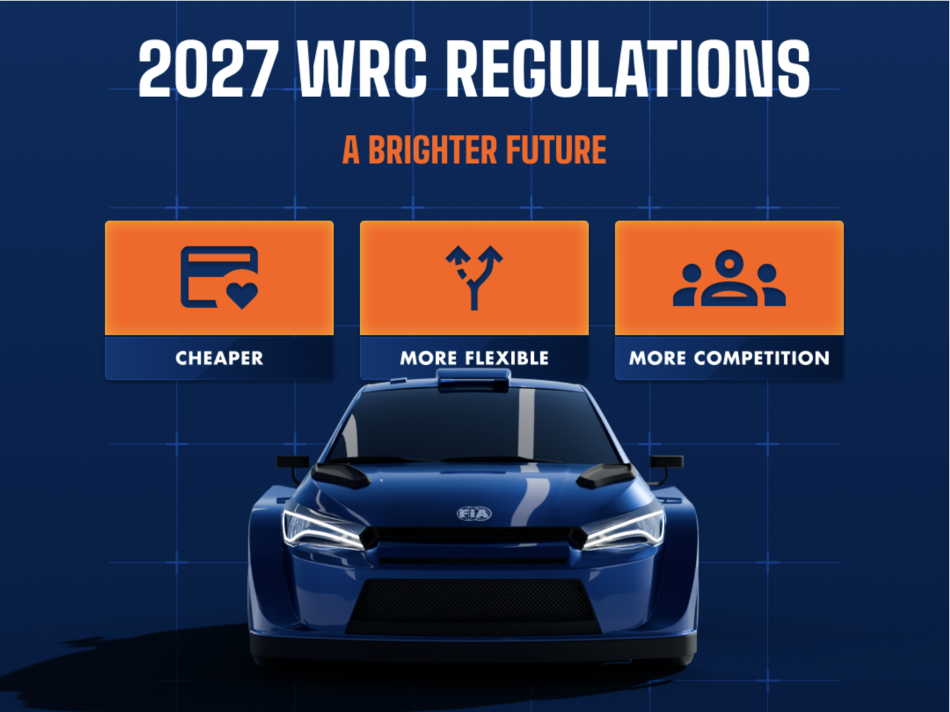
The FIA’s World Motor Sport Council has approved the technical regulations for the next generation of World Rally Championship (WRC) cars for the 2027 season and beyond. These regulations aim to create a “dynamic, flexible future” for the sport’s top tier. Referred to as WRC27, the WRC Commission, which comprises voting members from all current manufacturers, the WRC Promoter, and a representative of the crews, approved and agreed on the new regulations.
In a press release, the FIA stated that the “planned regulations cycle will last for ten years, ensuring a stable platform for manufacturers and teams to invest and grow the sport.” This much-needed provision offers clarity and constancy after a few rocky years of chopping and changing regulations, which frustrated manufacturers and teams.

Safety Cell Concept
With WRC27, flexibility is at the core of the WRC’s technical future. WRC27 will adopt a safety cell concept from the current generation of Rally1 cars that will be refined into a common design to reduce complexity and cost. This opens the rule book to allow broader bodywork styles from any scaled production car to be fitted to the safety cell. As per the press release, the FIA envisions this as “meaning that hatchbacks could conceivably compete against saloons, SUVs, and there’s even the possibility for bespoke rally concept designs to take to the stages from 2027.”
Cost control is critical
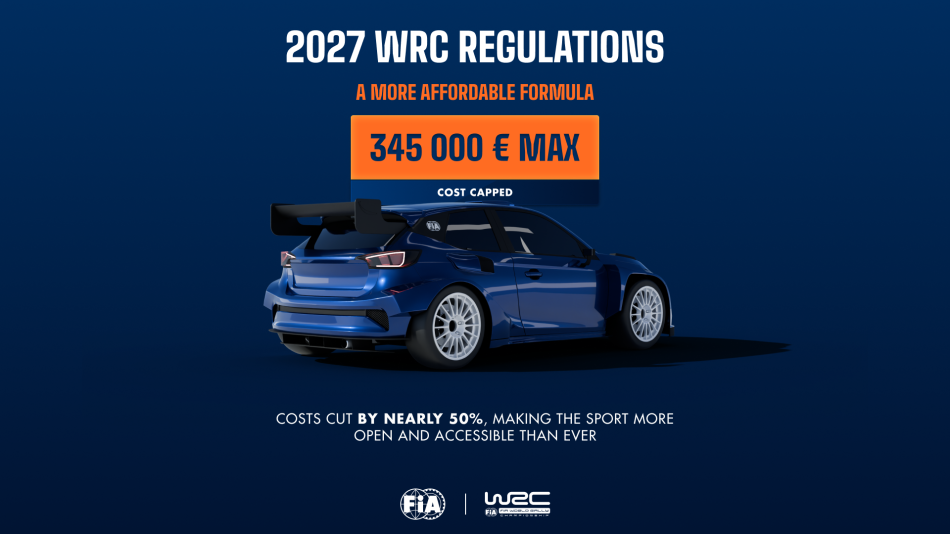
The current Rally1 machine costs north of €650,000, but the WRC27 regulations will cap the cost at €345,000. The Rally1 costs are prohibitively expensive, and introducing a drastic cost cap will likely tempt more teams and coax more manufacturers into the sport’s leading category.
Saving over 50% of the costs will be achieved through component cost specifications rather than financial regulations as in F1. There will also be reductions in technical designs of certain components to make them more durable for a rally.
Another way to slash budgets is to reduce team running costs. According to the FIA, this will be achieved by limiting personnel, reducing logistics transport costs, “increasing the use of local facilities, and increasing data connectivity to aid offsite engineering.”
Sustainability
The WRC’s already been making use of sustainable fuel since 2022, and the WRC27 regulations makes provision for different powerplant solutions for manufacturers. Manufacturers can run sustainably-fuelled internal combustion engines, hybrid powertrains, or fully-electric systems. The FIA’s target is for competitors to use sustainably-fuelled ICE powerplants in 2027, with diversification including hybrid systems or fully electric solutions that could be introduced at a later stage.
“This is a reflection of the current automotive landscape, with a plethora of different configurations catering for different situations in different markets,” stated the FIA. “By remaining open to all of these options while holding environmental sustainability at its core, the WRC will continue to be a trailblazer for technology.”
Crossover
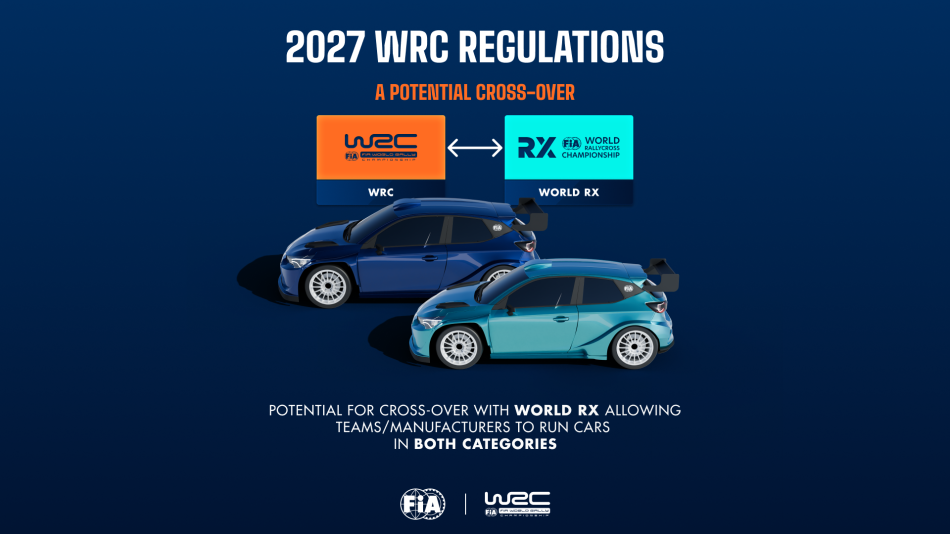
As if that wasn’t enough to keep manufacturers on their toes, the WRC27 regulations paved the way for a potential crossover between the WRC and the FIA World Rallycross Championship (World RX). This still requires further finessing and signatures, but the groundwork for this has been laid, meaning that manufacturers and teams can run programmes concurrently, and “potentially with different powertrains catering to the specific needs of each championship.”
What the leaders said
FIA President Mohammed Ben Sulayem said: “The regulations that we have approved today are critical to the long-term growth of the FIA World Rally Championship. They lay the foundations for an exciting future with a focus on cost containment, sustainability and growing participation at the top level of rallying.”
FIA President of the WRC Commission, Pernilla Solberg, said: “I would like to thank all the Commission members and the WRC Technical Working Group for the significant amount of work that has got us to this stage. We set some clear objectives based on what the competitors, organisers and fans were telling us, and this has resulted in a set of regulations that will massively reduce costs and allow independent teams to compete with manufacturers, while giving the WRC the flexibility to remain relevant regardless of the shifting automotive landscape. We still have some work to do, but I’m really excited for this future.”
Peter Thul, WRC Promoter Director of Sport, said: “Working with FIA and other stakeholders, WRC Promoter has been an active contributor in the process which was leading to these new technical regulations for 2027. The significant cost reduction is an important step to keep the current manufacturers in the championship and to encourage new manufacturers and brands to join the WRC. We thank all those involved from the FIA WRC Technical Working Group and believe that there is now a clear vision for the future.”
Cyril Abiteboul, President and Team Principal Hyundai Motorsport: “It is always positive for manufacturers to have a long-term roadmap for the championships that we can assess and improve altogether. We welcome the important efforts that have been made to reduce costs, as the sport needs to stabilize and develop its manufacturers base. We also look forward to developing the value of the sport by showcasing spectacular cars in exciting rally formats to increase the fanbase.
Malcolm Wilson, Managing Director M-Sport Ford WRT: “I think that the regulations approved to day are the correct way to go for the WRC. We need to have new entries, more teams and drivers competing at the top level, and these regulations for 2027 will encourage this. It will allow us to give more young drivers a chance, which is essential for the long-term success of the sport, and it’s also really important that we make the WRC more affordable, allowing teams to compete alongside manufacturers.”
Jari-Matti Latvala, Team Principal Toyota GAZOO Racing WRT: “We have been working hard with the FIA to contribute as much as we can towards the 2027 regulations. We believe the main headlines of draft regulations are well formulated and heading in the correct direction. We still believe there is important work to do in order to finalise and improve some of the details but at this stage that is totally normal.”
[…] announcing the WRC27 technical regulations to guide the future of our sport, the FIA also released news on the WRC’s points system for […]