
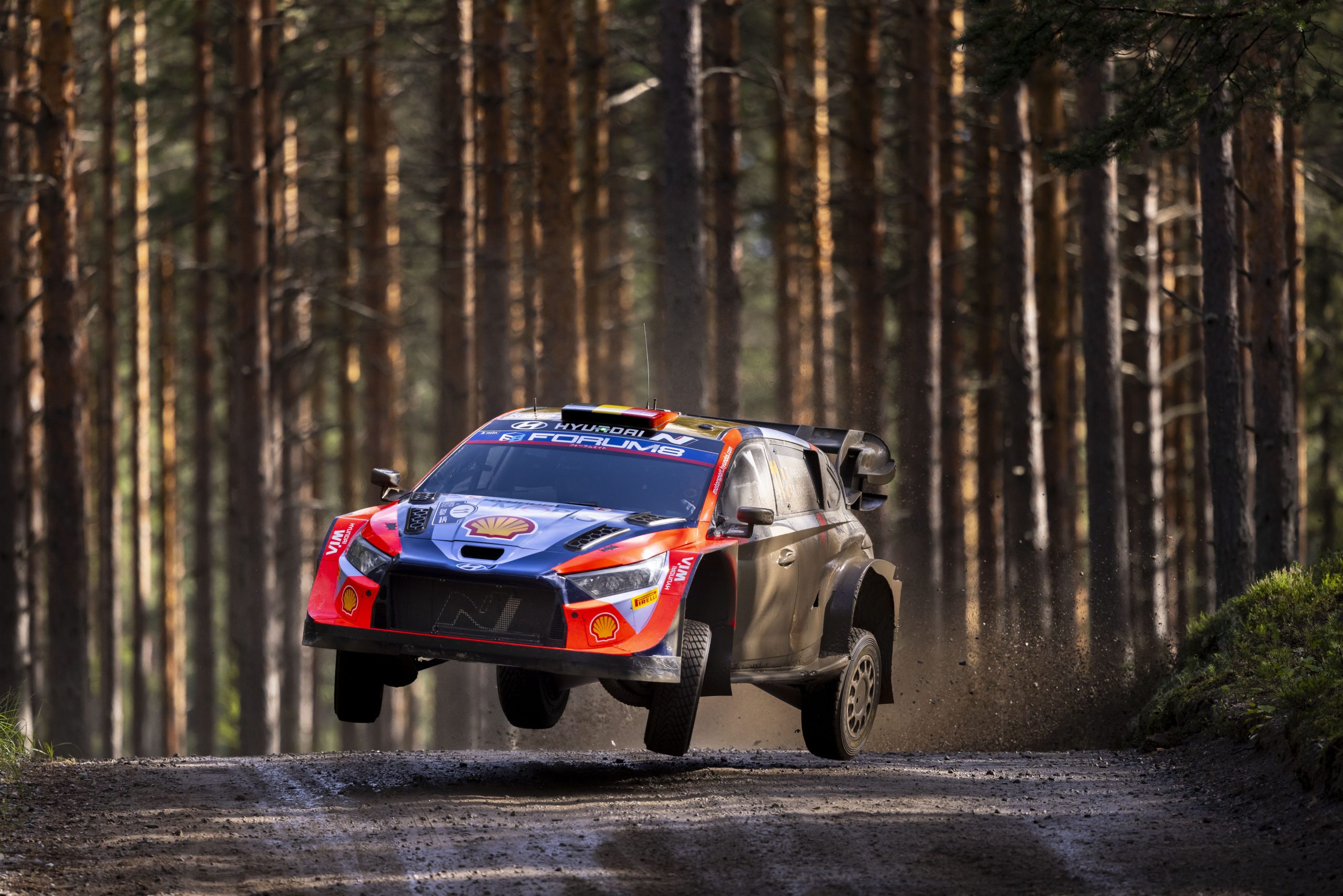
The World Rally Championship (WRC) is gearing up to push the boundaries of live broadcasting by testing Red Bull’s cutting-edge Drone 1, which promises to deliver a thrilling “over-the-shoulder” perspective of rally cars in action, reports SVG Europe. Fans can look forward to experiencing the same immersive views that have only been seen in video games – bringing the action to life like never before.
Capturing live footage of rally cars speeding through forests and mountain passes has always posed a significant challenge due to the unpredictable nature of rally environments, lack of infrastructure, and constantly changing weather conditions. But WRC is ready to embrace the challenge, as it plans to test the Red Bull Drone 1 at upcoming rallies to see if it can handle the unique demands of rallying.
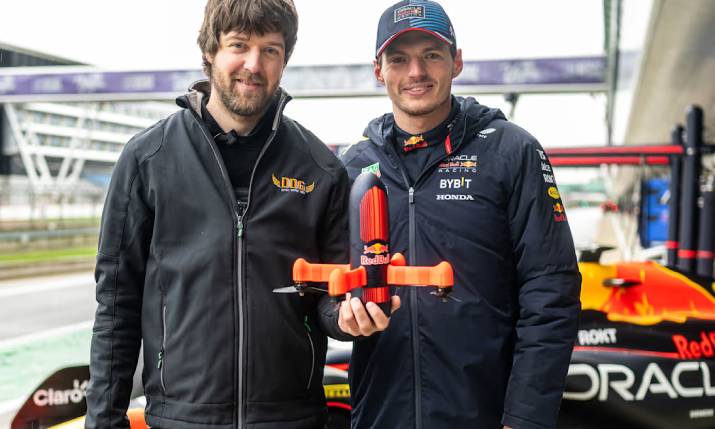
The Red Bull Drone 1 is a custom-built first-person view (FPV) drone developed by Ralph Hogenbirk and his Dutch Drone Gods team. It has already proven its capabilities by keeping pace with the Red Bull RB20 Formula 1 car during a full Grand Prix lap at the Silverstone Circuit in the UK. Now, WRC is excited to see what the drone can do on rally stages.
“We’re always looking for new ways to innovate our broadcasts and give fans something truly special,” said Florian Ruth, Senior Director of Content and Communication at WRC Promoter. “We’ve tested several drone systems this season, but the Red Bull Drone 1 is different. With its incredible speed and endurance, it could be a game-changer for how we capture and present the sport.”
The Red Bull Drone 1, which can hit top speeds of 350 km/h and accelerate from 100 km/h to 300 km/h in just two seconds, boasts impressive performance. During the test at Silverstone, it kept up with the F1 car’s blistering pace, generating 6G of force at full load and sustaining a flight time of up to eight minutes – something unheard of in traditional FPV drones.
Bringing gaming perspectives to reality
Ruth believes that the drone’s ability to provide an over-the-shoulder view for extended periods could transform live broadcasting for motorsport. “This drone offers a perspective that’s very familiar to gamers – the view from just behind and above the car. It’s a look that we want to bring to rally fans, not just for short bursts, but for an entire stage if possible. It’s something that could revolutionize the way people watch rallying.”
The innovative nature of Red Bull Drone 1 will also allow for the incorporation of exciting graphics and analysis features during replays and post-production. While advanced graphics like virtual and augmented reality are difficult to implement live due to the complexity and speed of the drone’s movements, there’s potential to add more interactive and gamified elements that could appeal to younger audiences and gaming enthusiasts.
From F1 to Rally: A new challenge
Red Bull approached Hogenbirk in early 2023 with a simple yet ambitious request – create a drone that could keep up with an F1 car for an entire lap. The result was the Red Bull Drone 1, a lightweight, high-speed drone that combined carbon, glass fibre, and 3D polymer construction to withstand extreme forces and remain airborne for several minutes. During a February 2024 test against Max Verstappen in the RB20, the drone proved its capabilities, although live streaming was not yet possible at the time.
“It’s the world’s fastest flying drone,” added Ruth. “No other FPV drone can follow a car at these speeds for such long periods. At the Formula 1 test, it stayed in the air for up to seven or eight minutes, which is really groundbreaking.”
WRC plans to test the Red Bull Drone 1 live at the upcoming Central European Rally, set for 17-20 October, pending favourable weather conditions. However, due to the challenging terrain and unpredictable weather at the WRC season finale in Japan, the drone will not be used there. If testing cannot go ahead as planned at the Central European Rally, the team intends to resume or start the trials early next year.
“There are too many factors at Rally Japan that could interfere with the drone’s performance,” Ruth explained. “But we’re hopeful for Rally Central Europe, and we’re excited to work closely with our parent company, Red Bull, to see this project come to life. We have big ambitions for Red Bull Drone 1, and we believe it can offer something truly unique to WRC broadcasts.”
With the potential to offer unprecedented views and an entirely new way of experiencing rallying, Red Bull Drone 1 could be a revolutionary addition to WRC’s broadcast arsenal. Fans can expect even more exciting developments as WRC and Red Bull continue to push the boundaries of motorsport broadcasting innovation.