
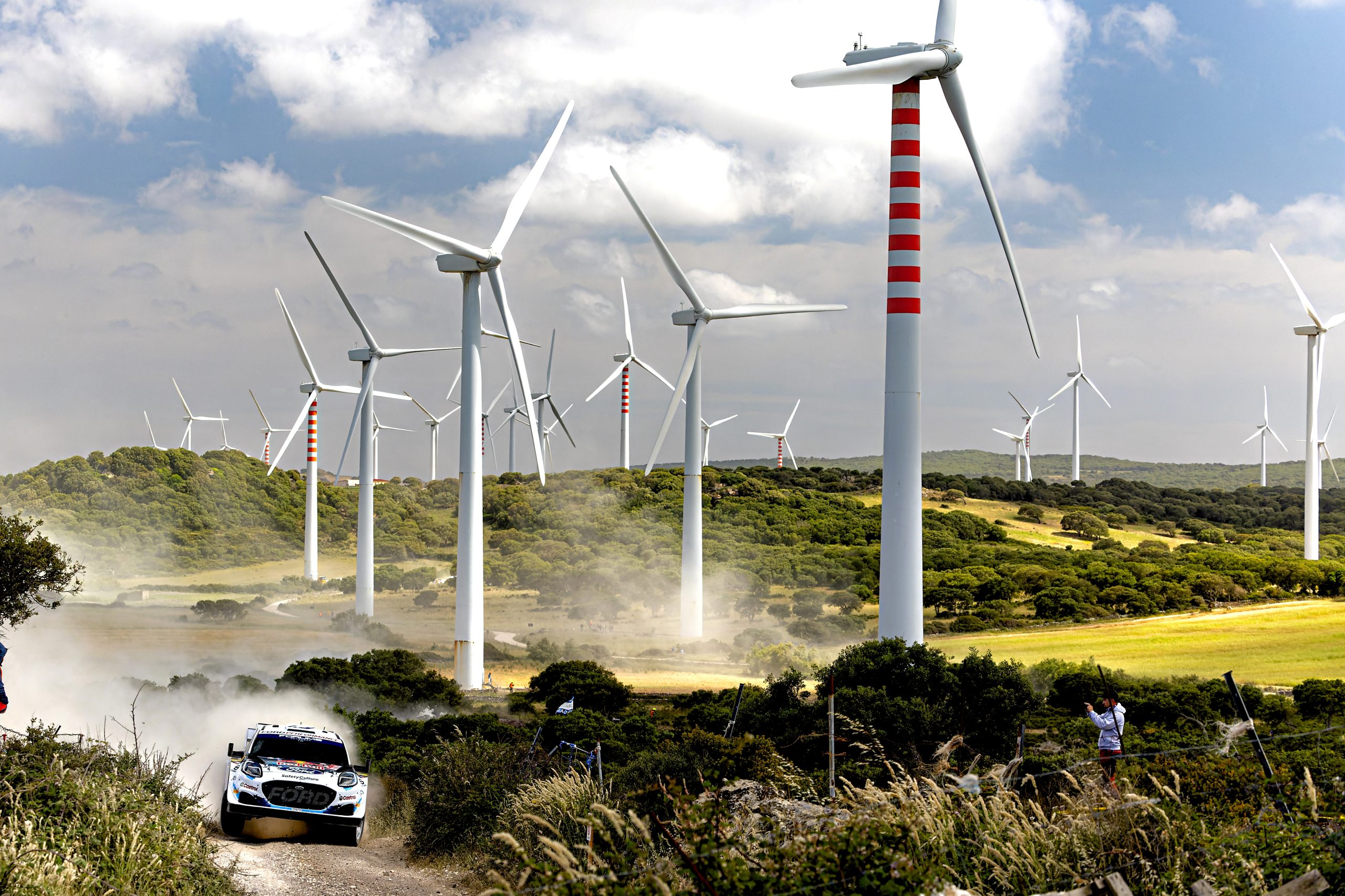
The World Rally Championship (WRC) has long been a testing ground for automotive innovation, with regulations often acting as a precursor to what we see on road cars. As we head toward 2027, the Fédération Internationale de l’Automobile (FIA) is weighing a trio of powertrain options that could significantly impact the future of Rally1 and Rally2 classes: internal combustion engines (ICE), hybrid powertrains, and full-electric vehicles, according to this report by Motorsport.com.
The conversation surrounding the future of rallying has gained traction as the FIA has been working diligently for over 18 months to carve out a roadmap that keeps existing manufacturers engaged and tempts new marques to join the rallying fold. It’s a crucial moment for the sport, as Rally1 cars have already adopted hybrid power since 2022, blending 1.6-litre turbocharged engines with a control Compact Dynamics hybrid unit. So, what comes next?
According to FIA technical director Xavier Mestelan Pinon, nothing is off the table just yet, as the governing body strives to find a balanced path that promotes technology development while keeping the essence of rallying intact. The world governing body is expected to reveal its 2027 regulations at the World Motor Sport Council in December. Until then, the debate over what’s best for rally remains open.
ICE, Hybrid, or Full Electric: What’s Best for WRC?
One of the biggest questions surrounding the WRC’s future is whether the sport should remain true to its internal combustion engine roots or shift gears towards hybrid and full-electric powertrains. Mestelan Pinon suggests that all three options are still on the table. However, the goal is to make a decision that benefits the sport’s unique nature, where rugged terrain, long stages, and varied conditions set rallying apart from other forms of motorsport.
“Today we strongly believe that biofuel or synthetic fuel is a good business,” explains Mestelan Pinon. “Now after that, we want to open the rules to electrify the engine, and when I say that, it could be hybrid or full EV. This is something, again, we need to finalise, but this is the target.”
Mestelan Pinon’s statement hints at a technology equivalence strategy, where ICE, hybrid, and full-electric vehicles can compete side-by-side. This would require balancing performance, weight, and endurance capabilities—factors that have always been critical in rallying. A level playing field could entice more manufacturers, with some potentially leveraging rally as a testing ground for future electric vehicle developments.
The challenges of full llectrification in rally
Full-electric power has found success in other motorsport disciplines, such as rallycross. The FIA has already seen rallycross embrace electric power with encouraging results. Meanwhile, the ADAC Opel Electric Rally Cup, built around the two-wheel-drive Opel Corsa-e Rally car, is wrapping up its fourth season this year. This showcases that electric rallying is not just possible—it’s here.
But the transition is far from straightforward. Rallying’s nature involves tackling long, rugged stages far from infrastructure. Managing battery range, weight, and recharging could present significant challenges, especially on stages that exceed 35 kilometres. Mestelan Pinon sees potential here, stating, “Full EV could make sense because for stages that are 35 kilometres, it is easy to manage with the same level of performance as the ICE car, and you can have some charging units at the end of each stage.”
Still, questions remain: Will there be enough charging infrastructure at the events? How will electric vehicles handle the harsh, unpredictable environments of rallying? And can the sport maintain its core identity if the roar of internal combustion is replaced by the whirr of electric motors?
Hybrid: The best of both worlds?
Hybrid power seems like a safe bet, especially given that Rally1 cars have been running hybrid setups since 2022. These cars deliver around 500 horsepower during short bursts, thanks to a mix of their 1.6-litre turbocharged ICE and an electric motor. The hybrid format allows manufacturers to experiment with new technologies while maintaining the visceral, loud, and aggressive nature of rallying that fans love.
This could provide the WRC with the best of both worlds—a bridge between traditional combustion engines and the electrification trend. Mestelan Pinon suggests that a hybrid or electrified version of Rally1 cars could be viable, stating, “We strongly believe that an electrified version could make sense… but we need to be open-minded. It is too difficult to say if the direction will be ICE and full EV or ICE and full EV plus hybrid.”
Beyond powertrains: Chassis and cost control
The 2027 discussions aren’t solely focused on powertrains. The FIA is also considering modifications to the Rally1 spaceframe chassis, first introduced in 2022, to enhance safety and accommodate a wider range of vehicle body shapes. There’s even talk of opening up chassis construction to tuning companies instead of locking it exclusively to manufacturers.
Cost control remains a key issue, as Mestelan Pinon acknowledges that the current figures—around €400,000 per Rally1 car—are a significant barrier to entry for new competitors. He emphasises that the FIA aims to ensure Rally1 cars continue to be based on road-going vehicles, potentially with reduced performance and aerodynamics, to make the category more accessible for developing drivers.
What Does the Future Hold?
As the FIA finalises its proposal for the World Motor Sport Council, it’s clear that the future of rallying is being shaped by broader automotive industry trends. Whether full electric, hybrid, or a revitalised internal combustion engine formula becomes the standard, the decision will influence how rallying is perceived and who will compete.
The WRC’s future could very well be determined by a mix of technological innovations, cost considerations, and fan expectations. As Mestelan Pinon aptly put it, “We need to decide altogether with the WRC Commission president, the manufacturers, the promoters, and the World Motor Sport Council. It’s a global decision.”
So, what do you think? Should the WRC embrace the electric revolution, stick with its internal combustion heritage, or opt for a hybrid solution? Whatever the answer, one thing is certain: the WRC is gearing up for its most significant evolution yet, and fans are in for a thrilling ride.